
QRadar SOAR Playbooks
Company
IBM
Project Duration
1+ year(s)
Role
UX Designer & Strategist
The Problem
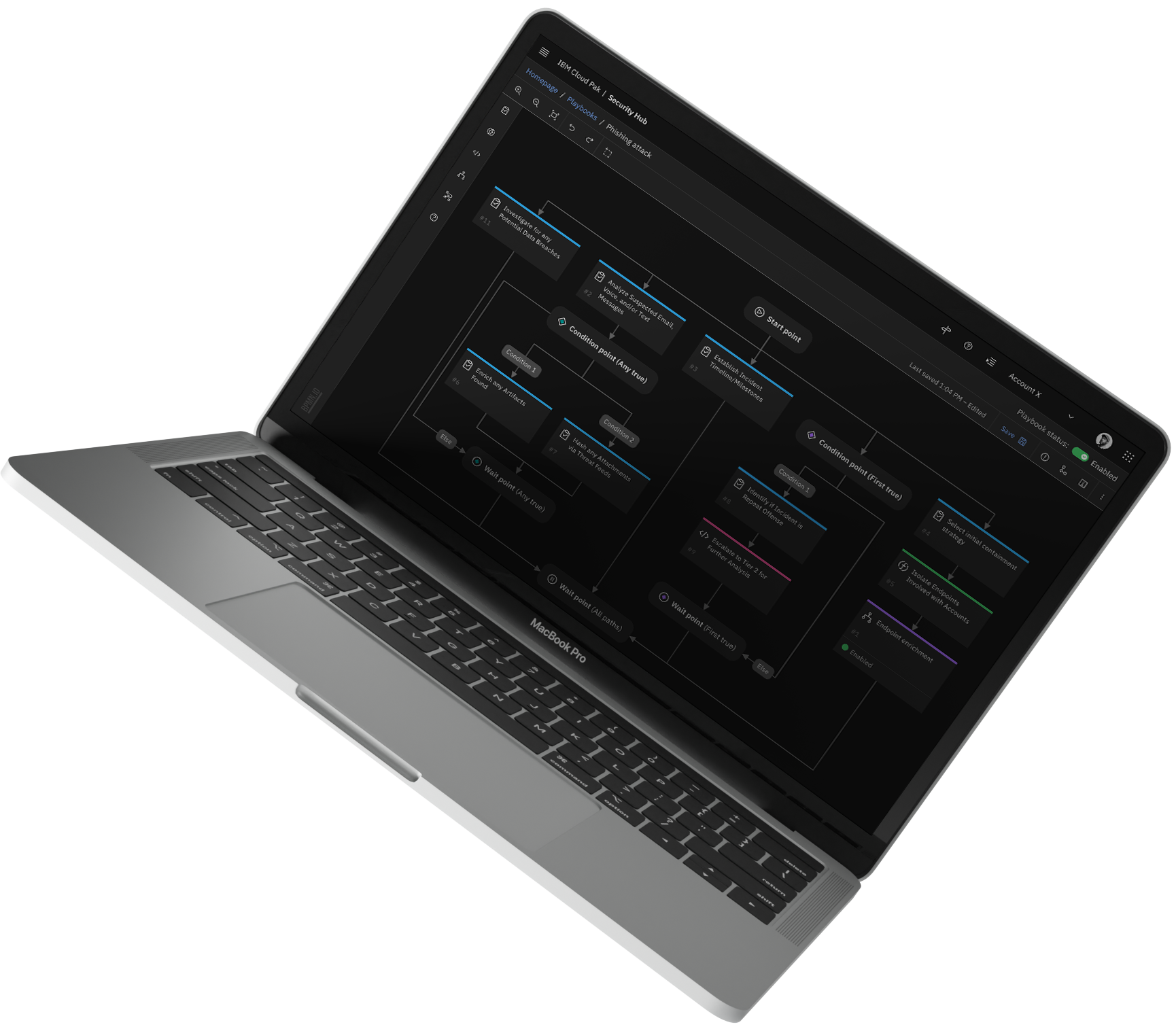
The current process of playbook creation is tedious and fragmented, lacking an end-to-end view that administrators desperately need. Navigating through complex, siloed systems, administrators spend weeks just trying to find the right tools to build a playbook—a costly delay when every second counts.
In today's landscape of increasingly sophisticated cyber-attacks, Security Administrators rely on playbooks to automate vital processes that safeguard their ecosystems. That's where Playbook Designer steps in. It simplifies the complexity, connecting seamlessly to external apps and creating custom, automated actions that drastically reduce the manual workload for cybersecurity analysts.
IBM recognized the critical need to revolutionize this process and was committed to transforming how playbooks are designed, making cybersecurity not just more efficient, but also more proactive.
My Role
On SOAR Playbooks, I led the re-architecture of the application to improve how SOC analysts design and execute security defense workflows. I focused on creating a more intuitive and efficient experience, while also contributing to a low-code/no-code solution that enabled non-technical analysts to build playbooks.
I collaborated closely with stakeholders to identify key gaps, define product direction, and align development with user and business needs. I also supported team growth by onboarding and mentoring new members to ensure strong execution and continuity.
Impact
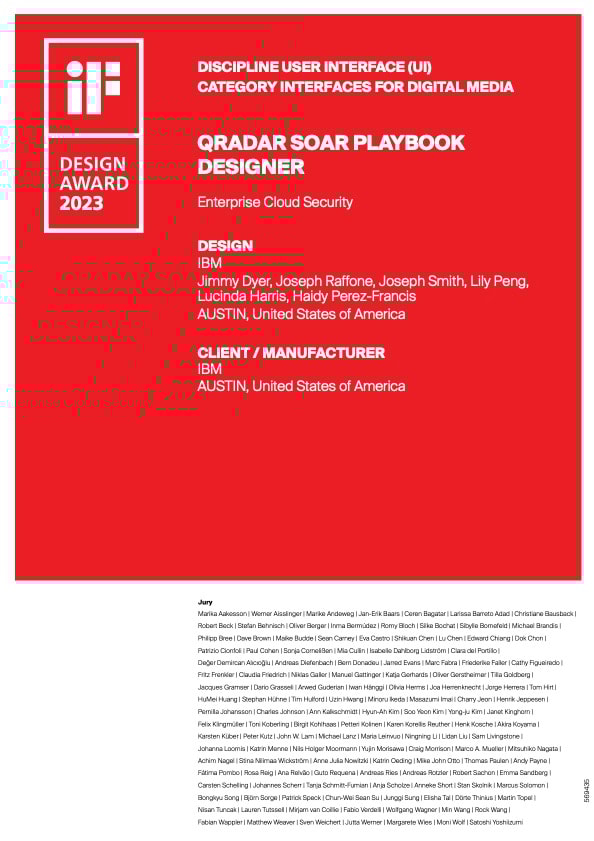
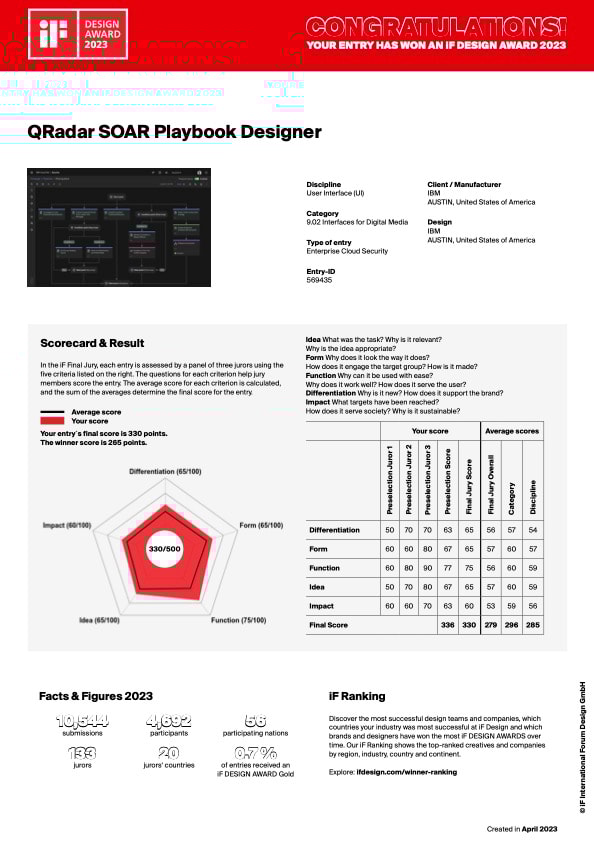
- Helped drive the platform from 300M to 800M ARR
- Time to create playbooks decreased from 60 hrs to 1 hr (60X faster)
- First D&UX review with a B grade
- Cross functional alignment
- Platform optimization
- User efficiency


Some of my work
Navigation Optimization
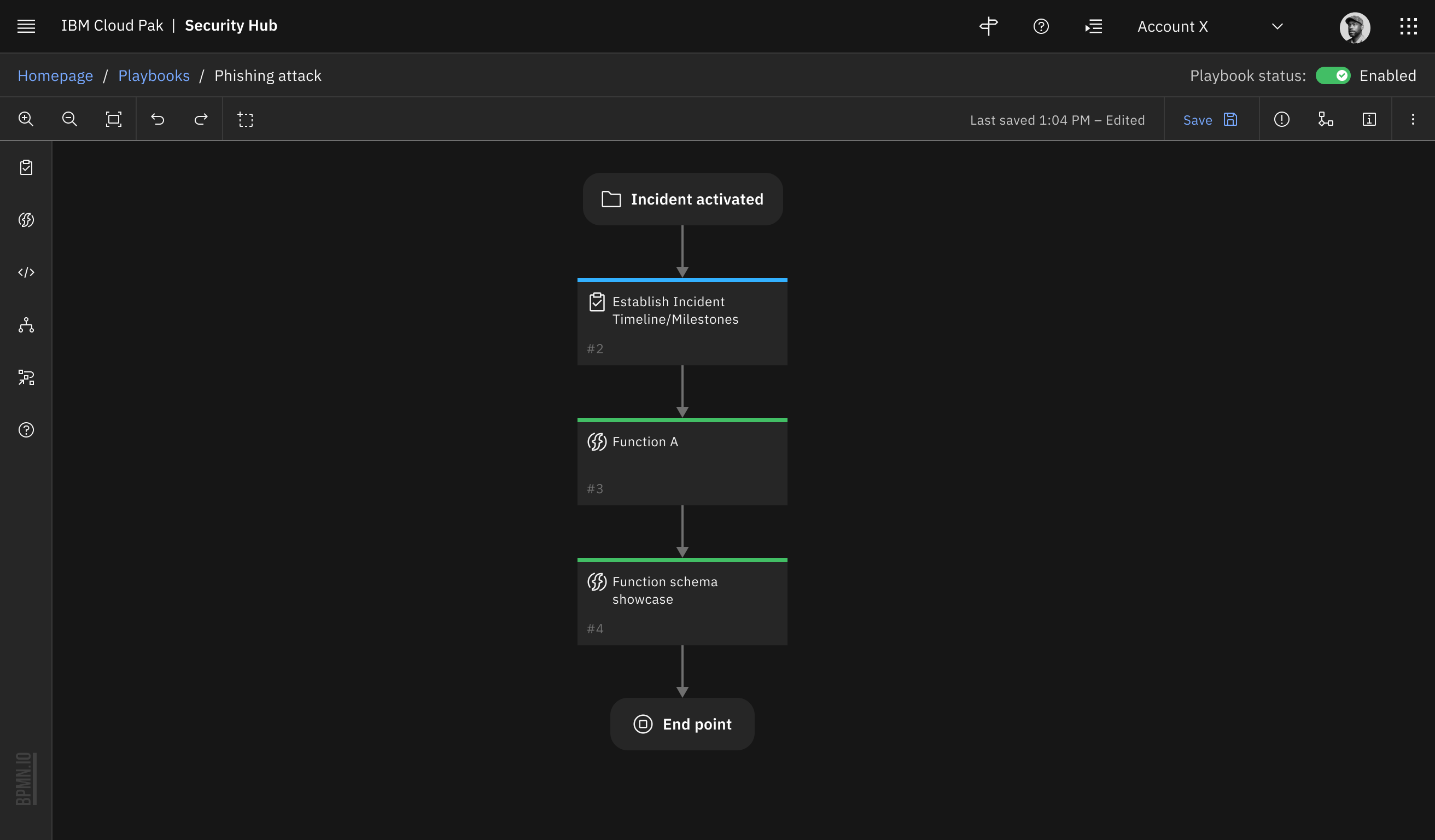
The Playbook toolbar initially contained too much functionality, limiting its scalability. To address this, I drew inspiration from design applications like Photoshop and Blender, known for their ability to manage extensive functionalities within their toolbars. Collaborating with the team lead, I spearheaded the redesign of the toolbar to create a more organized and scalable experience, allowing users to work within their playbook with a more structured, sectioned approach.
Previous toolbar

Upgraded toolbar


Playbook Data Navigator
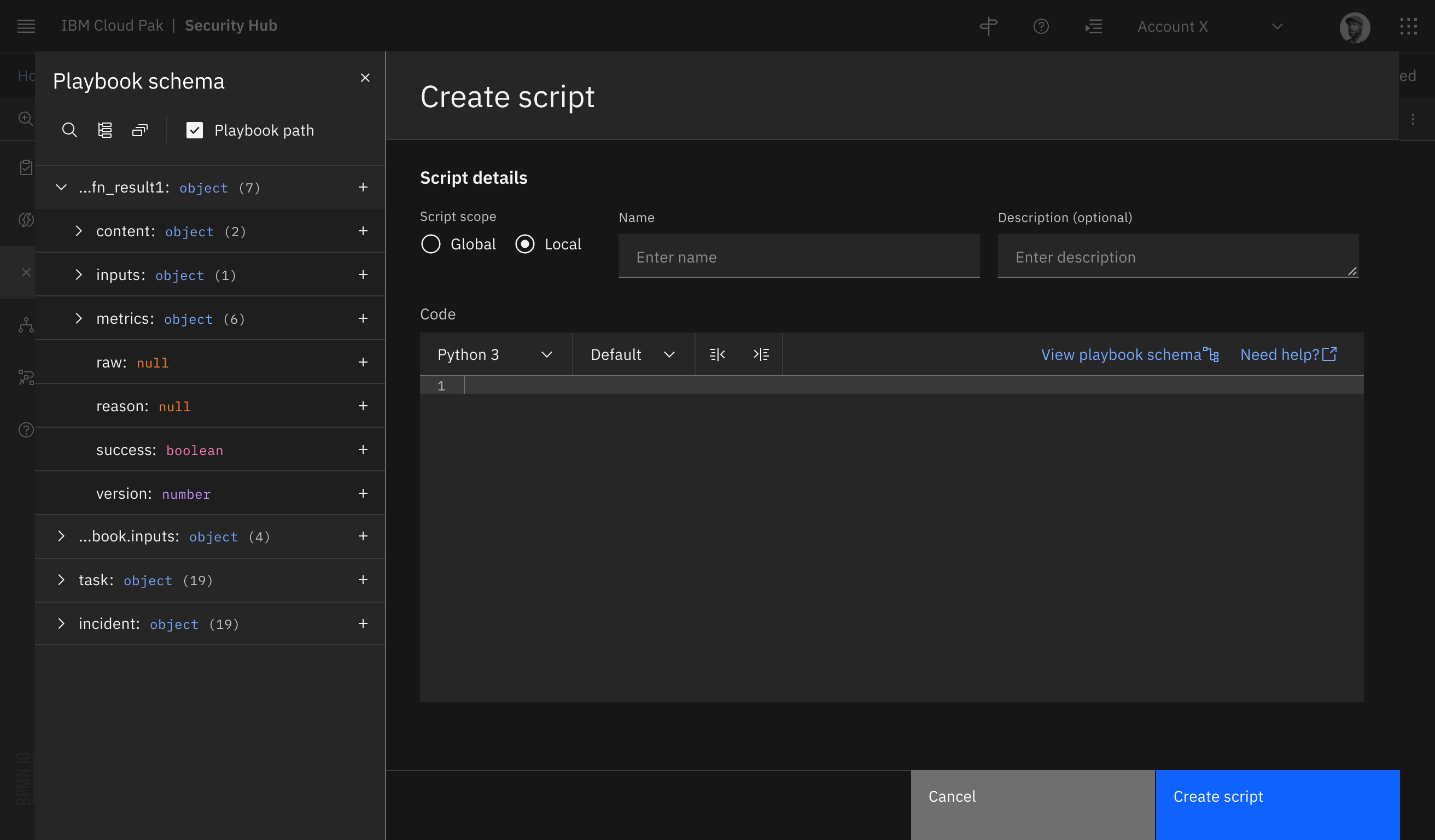
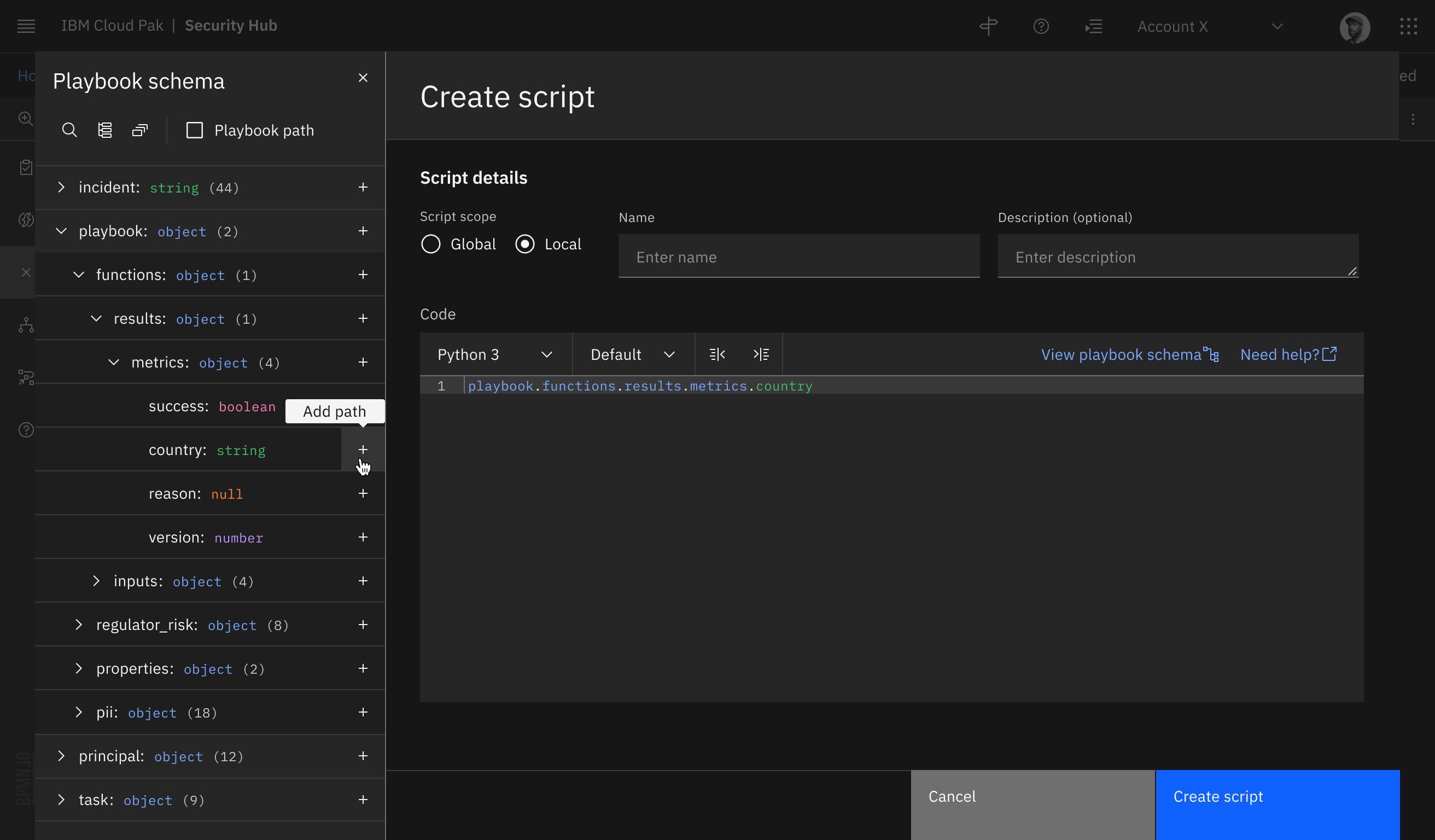
Security analysts typically require knowledge of Python to construct effective Playbooks, making the creation process challenging and narrowing the pool of suitable candidates.
To address this issue, the Playbook Data Navigator introduced a low-code/no-code solution, enhancing multiple aspects of the application. With this new feature, users no longer need to memorize extensive code sets or their Playbook architecture when building a schema. By providing the appropriate code upfront, the Data Navigator reduces schema creation time by 33% for custom schemas and 79% for Playbooks-based schemas. This advancement has shifted the application’s skill requirements, allowing security businesses to prioritize hiring based on security expertise rather than specific coding skills.
“This is a really cool feature”
-Security Analyst

QRadar SOAR Playbooks
Company
IBM
Project Duration
1+ year(s)
Role
UX Designer & Strategist
The Problem
The current process of playbook creation is tedious and fragmented, lacking an end-to-end view that administrators desperately need. Navigating through complex, siloed systems, administrators spend weeks just trying to find the right tools to build a playbook—a costly delay when every second counts.
In today's landscape of increasingly sophisticated cyber-attacks, Security Administrators rely on playbooks to automate vital processes that safeguard their ecosystems. That's where Playbook Designer steps in. It simplifies the complexity, connecting seamlessly to external apps and creating custom, automated actions that drastically reduce the manual workload for cybersecurity analysts.
IBM recognized the critical need to revolutionize this process and was committed to transforming how playbooks are designed, making cybersecurity not just more efficient, but also more proactive.
My Role
On SOAR Playbooks, I led the re-architecture of the application to improve how SOC analysts design and execute security defense workflows. I focused on creating a more intuitive and efficient experience, while also contributing to a low-code/no-code solution that enabled non-technical analysts to build playbooks.
I collaborated closely with stakeholders to identify key gaps, define product direction, and align development with user and business needs. I also supported team growth by onboarding and mentoring new members to ensure strong execution and continuity.
Impact
- Helped drive the platform from 300M to 800M ARR
- Time to create playbooks decreased from 60 hrs to 1 hr (60X faster)
- First D&UX review with a B grade
- Cross functional alignment
- Platform optimization
- User efficiency
Some of my work
Navigation Optimization
The Playbook toolbar initially contained too much functionality, limiting its scalability. To address this, I drew inspiration from design applications like Photoshop and Blender, known for their ability to manage extensive functionalities within their toolbars. Collaborating with the team lead, I spearheaded the redesign of the toolbar to create a more organized and scalable experience, allowing users to work within their playbook with a more structured, sectioned approach.
Previous toolbar
Upgraded toolbar
Playbook Data Navigator
Security analysts typically require knowledge of Python to construct effective Playbooks, making the creation process challenging and narrowing the pool of suitable candidates.
To address this issue, the Playbook Data Navigator introduced a low-code/no-code solution, enhancing multiple aspects of the application. With this new feature, users no longer need to memorize extensive code sets or their Playbook architecture when building a schema. By providing the appropriate code upfront, the Data Navigator reduces schema creation time by 33% for custom schemas and 79% for Playbooks-based schemas. This advancement has shifted the application’s skill requirements, allowing security businesses to prioritize hiring based on security expertise rather than specific coding skills.
“This is a really cool feature”
-Security Analyst
QRadar SOAR Playbooks
Company
IBM
Project Duration
1+ year(s)
Role
UX Designer & Strategist
The Problem
The current process of playbook creation is tedious and fragmented, lacking an end-to-end view that administrators desperately need. Navigating through complex, siloed systems, administrators spend weeks just trying to find the right tools to build a playbook—a costly delay when every second counts.
In today's landscape of increasingly sophisticated cyber-attacks, Security Administrators rely on playbooks to automate vital processes that safeguard their ecosystems. That's where Playbook Designer steps in. It simplifies the complexity, connecting seamlessly to external apps and creating custom, automated actions that drastically reduce the manual workload for cybersecurity analysts.
IBM recognized the critical need to revolutionize this process and was committed to transforming how playbooks are designed, making cybersecurity not just more efficient, but also more proactive.
My Role
On SOAR Playbooks, I led the re-architecture of the application to improve how SOC analysts design and execute security defense workflows. I focused on creating a more intuitive and efficient experience, while also contributing to a low-code/no-code solution that enabled non-technical analysts to build playbooks.
I collaborated closely with stakeholders to identify key gaps, define product direction, and align development with user and business needs. I also supported team growth by onboarding and mentoring new members to ensure strong execution and continuity.
Impact
- Helped drive the platform from 300M to 800M ARR
- Time to create playbooks decreased from 60 hrs to 1 hr (60X faster)
- First D&UX review with a B grade
- Cross functional alignment
- Platform optimization
- User efficiency
Some of my work
Navigation Optimization
The Playbook toolbar initially contained too much functionality, limiting its scalability. To address this, I drew inspiration from design applications like Photoshop and Blender, known for their ability to manage extensive functionalities within their toolbars. Collaborating with the team lead, I spearheaded the redesign of the toolbar to create a more organized and scalable experience, allowing users to work within their playbook with a more structured, sectioned approach.
Previous toolbar
Upgraded toolbar
Playbook Data Navigator
Security analysts typically require knowledge of Python to construct effective Playbooks, making the creation process challenging and narrowing the pool of suitable candidates.
To address this issue, the Playbook Data Navigator introduced a low-code/no-code solution, enhancing multiple aspects of the application. With this new feature, users no longer need to memorize extensive code sets or their Playbook architecture when building a schema. By providing the appropriate code upfront, the Data Navigator reduces schema creation time by 33% for custom schemas and 79% for Playbooks-based schemas. This advancement has shifted the application’s skill requirements, allowing security businesses to prioritize hiring based on security expertise rather than specific coding skills.
“This is a really cool feature”
-Security Analyst