
QRadar NGSIEM
Company
IBM
Project Duration
1+ year(s)
Role
UX Strategist
The Problem
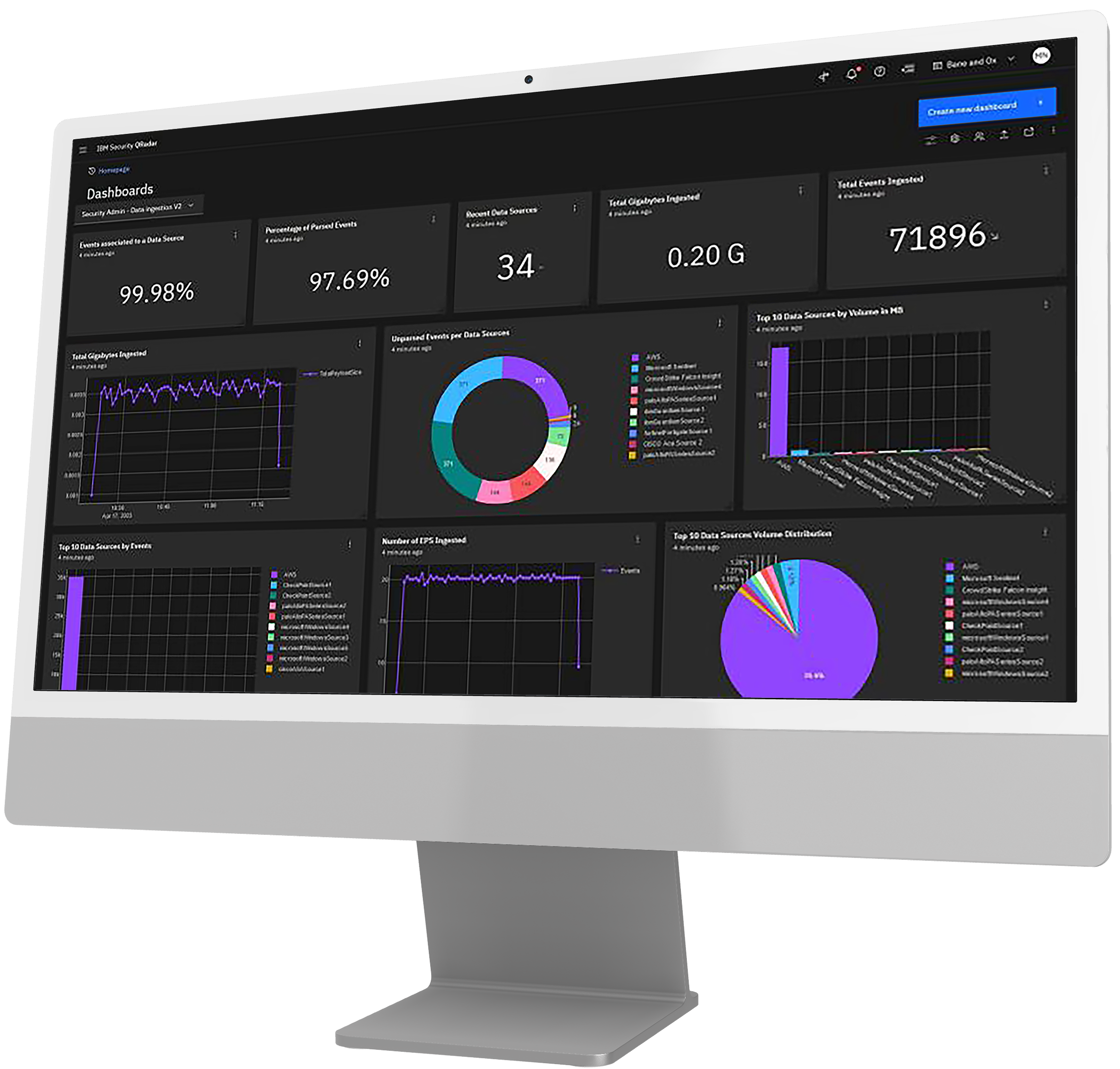
Security Information and Event Management (SIEM) enables organizations to detect and respond to security threats. While IBM's SIEM performed well when integrated with other applications or used for specific, isolated purposes, it lacked a unified ecosystem that could function seamlessly across all of IBM’s SIEM applications.
The Next Gen SIEM project aimed to bridge this gap. The objective was to analyze internal workflows across our SIEM applications and identify the missing links, transforming IBM’s SIEM product from a siloed experience into a cohesive, interconnected ecosystem.
My Role
Within SIEM, I drove UX improvements by identifying gaps across the platform and aligning the experience to better support SOC analyst workflows. My work focused on increasing cross-product adoption by creating a more connected and intuitive ecosystem.
I defined user journeys and Jobs To Be Done for key personas, translating insights into targeted features and experience improvements. Partnering with subject matter experts ensured our direction was rooted in real operational needs.
These efforts led to a more seamless QRadar experience and helped shape a long-term product strategy, contributing to a multi-year roadmap for the platform.
Impact
- 5 year company roadmap
- Connected siloed platforms into a single ecosystem
- Expected $200m upsell increase due to connected workflow experiences
- Systems thinking to identify persona gaps
My Focus
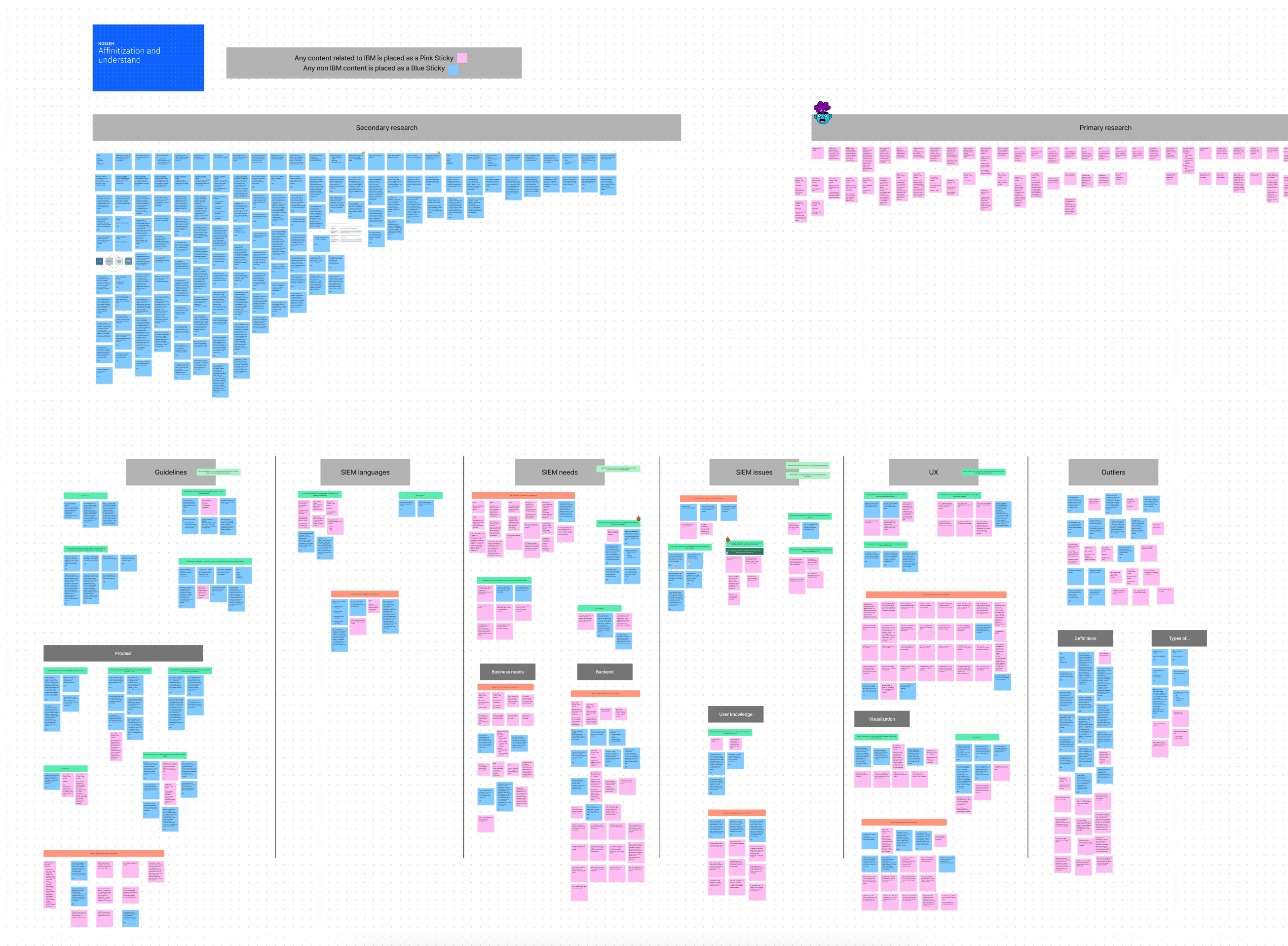
I led the team through the collection of both primary and secondary research, followed by synthesizing the findings through the affinitization process. This approach allowed us to effectively identify key features our system lacked, helping us prioritize those needs for future development.
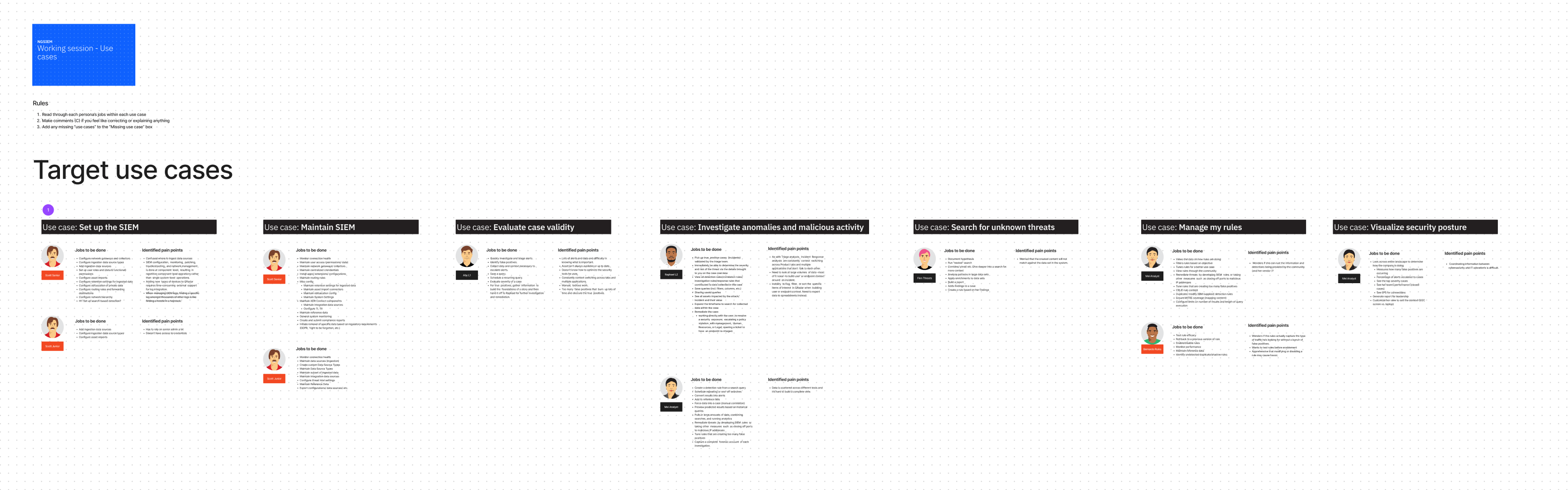
Following the synthesis, I assisted in facilitating a series of working sessions with stakeholders across the Security division, including product managers, development leads, architects, and design leads. These sessions were crucial in aligning on a shared vision and establishing a desired outcome for the project.
Jobs To Be Done
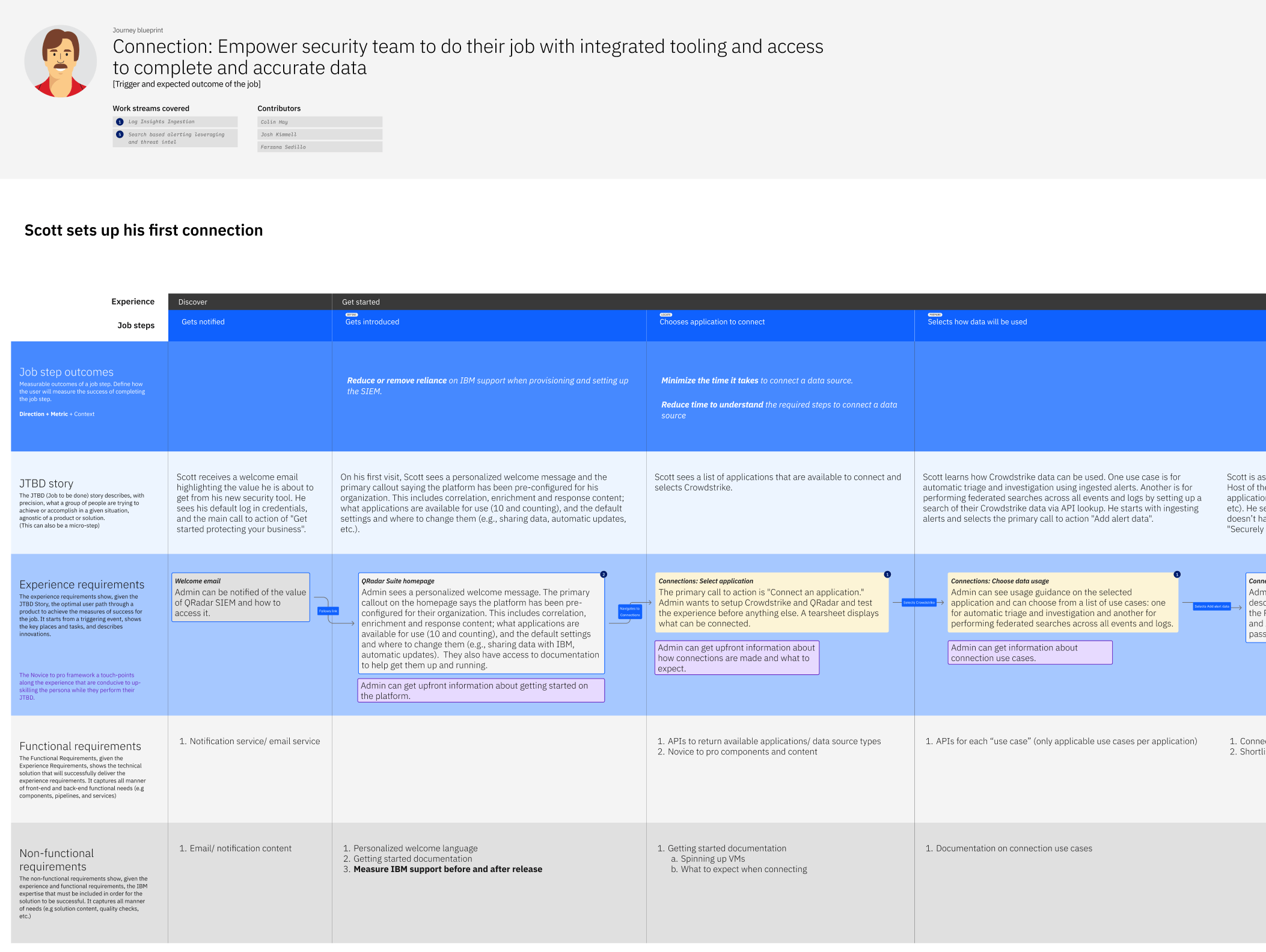
Once the personas and use cases were established, I collaborated with the team to map out the steps for each use case and identify the specific user needs, ensuring that user experience remained at the forefront for a seamless connection. We developed journey maps for each identified need, highlighting opportunities for innovation.
After securing alignment with stakeholders on the key opportunities, we created detailed Jobs-to-be-done that outlined the user’s experience in completing tasks and benefiting from the innovative solutions.
With consensus on the target experiences and innovative approaches to address user needs, we successfully structured a design roadmap that would guide teams for years to come.

QRadar NGSIEM
Company
IBM
Project Duration
1+ year(s)
Role
UX Strategist
The Problem
Security Information and Event Management (SIEM) enables organizations to detect and respond to security threats. While IBM's SIEM performed well when integrated with other applications or used for specific, isolated purposes, it lacked a unified ecosystem that could function seamlessly across all of IBM’s SIEM applications.
The Next Gen SIEM project aimed to bridge this gap. The objective was to analyze internal workflows across our SIEM applications and identify the missing links, transforming IBM’s SIEM product from a siloed experience into a cohesive, interconnected ecosystem.
My Role
Within SIEM, I drove UX improvements by identifying gaps across the platform and aligning the experience to better support SOC analyst workflows. My work focused on increasing cross-product adoption by creating a more connected and intuitive ecosystem.
I defined user journeys and Jobs To Be Done for key personas, translating insights into targeted features and experience improvements. Partnering with subject matter experts ensured our direction was rooted in real operational needs.
These efforts led to a more seamless QRadar experience and helped shape a long-term product strategy, contributing to a multi-year roadmap for the platform.
Impact
- 5 year company roadmap
- Connected siloed platforms into a single ecosystem
- Expected $200m upsell increase due to connected workflow experiences
- Systems thinking to identify persona gaps
My Focus
I led the team through the collection of both primary and secondary research, followed by synthesizing the findings through the affinitization process. This approach allowed us to effectively identify key features our system lacked, helping us prioritize those needs for future development.
Following the synthesis, I assisted in facilitating a series of working sessions with stakeholders across the Security division, including product managers, development leads, architects, and design leads. These sessions were crucial in aligning on a shared vision and establishing a desired outcome for the project.
Jobs To Be Done
Once the personas and use cases were established, I collaborated with the team to map out the steps for each use case and identify the specific user needs, ensuring that user experience remained at the forefront for a seamless connection. We developed journey maps for each identified need, highlighting opportunities for innovation.
After securing alignment with stakeholders on the key opportunities, we created detailed Jobs-to-be-done that outlined the user’s experience in completing tasks and benefiting from the innovative solutions.
With consensus on the target experiences and innovative approaches to address user needs, we successfully structured a design roadmap that would guide teams for years to come.
QRadar NGSIEM
Company
IBM
Project Duration
1+ year(s)
Role
UX Strategist
The Problem
Security Information and Event Management (SIEM) enables organizations to detect and respond to security threats. While IBM's SIEM performed well when integrated with other applications or used for specific, isolated purposes, it lacked a unified ecosystem that could function seamlessly across all of IBM’s SIEM applications.
The Next Gen SIEM project aimed to bridge this gap. The objective was to analyze internal workflows across our SIEM applications and identify the missing links, transforming IBM’s SIEM product from a siloed experience into a cohesive, interconnected ecosystem.
My Role
Within SIEM, I drove UX improvements by identifying gaps across the platform and aligning the experience to better support SOC analyst workflows. My work focused on increasing cross-product adoption by creating a more connected and intuitive ecosystem.
I defined user journeys and Jobs To Be Done for key personas, translating insights into targeted features and experience improvements. Partnering with subject matter experts ensured our direction was rooted in real operational needs.
These efforts led to a more seamless QRadar experience and helped shape a long-term product strategy, contributing to a multi-year roadmap for the platform.
Impact
- 5 year company roadmap
- Connected siloed platforms into a single ecosystem
- Expected $200m upsell increase due to connected workflow experiences
- Systems thinking to identify persona gaps
My Focus
I led the team through the collection of both primary and secondary research, followed by synthesizing the findings through the affinitization process. This approach allowed us to effectively identify key features our system lacked, helping us prioritize those needs for future development.
Following the synthesis, I assisted in facilitating a series of working sessions with stakeholders across the Security division, including product managers, development leads, architects, and design leads. These sessions were crucial in aligning on a shared vision and establishing a desired outcome for the project.
Jobs To Be Done
Once the personas and use cases were established, I collaborated with the team to map out the steps for each use case and identify the specific user needs, ensuring that user experience remained at the forefront for a seamless connection. We developed journey maps for each identified need, highlighting opportunities for innovation.
After securing alignment with stakeholders on the key opportunities, we created detailed Jobs-to-be-done that outlined the user’s experience in completing tasks and benefiting from the innovative solutions.
With consensus on the target experiences and innovative approaches to address user needs, we successfully structured a design roadmap that would guide teams for years to come.